Building the Intelligence Layer for Brand Growth
Principal UX Designer | Proof of Concept | 1 Month
Brands were running banners and posters across our network but could not answer a simple question:
“What is actually working?”
There was no full funnel view. No pincode-level clarity. No clear attribution.
I designed Brand Intelligence Portal (BIP) to solve this. A single, simple system that shows the journey from view to purchase, region to revenue, and first-time buyer to repeat customer.
BIP transforms scattered data into actionable clarity.
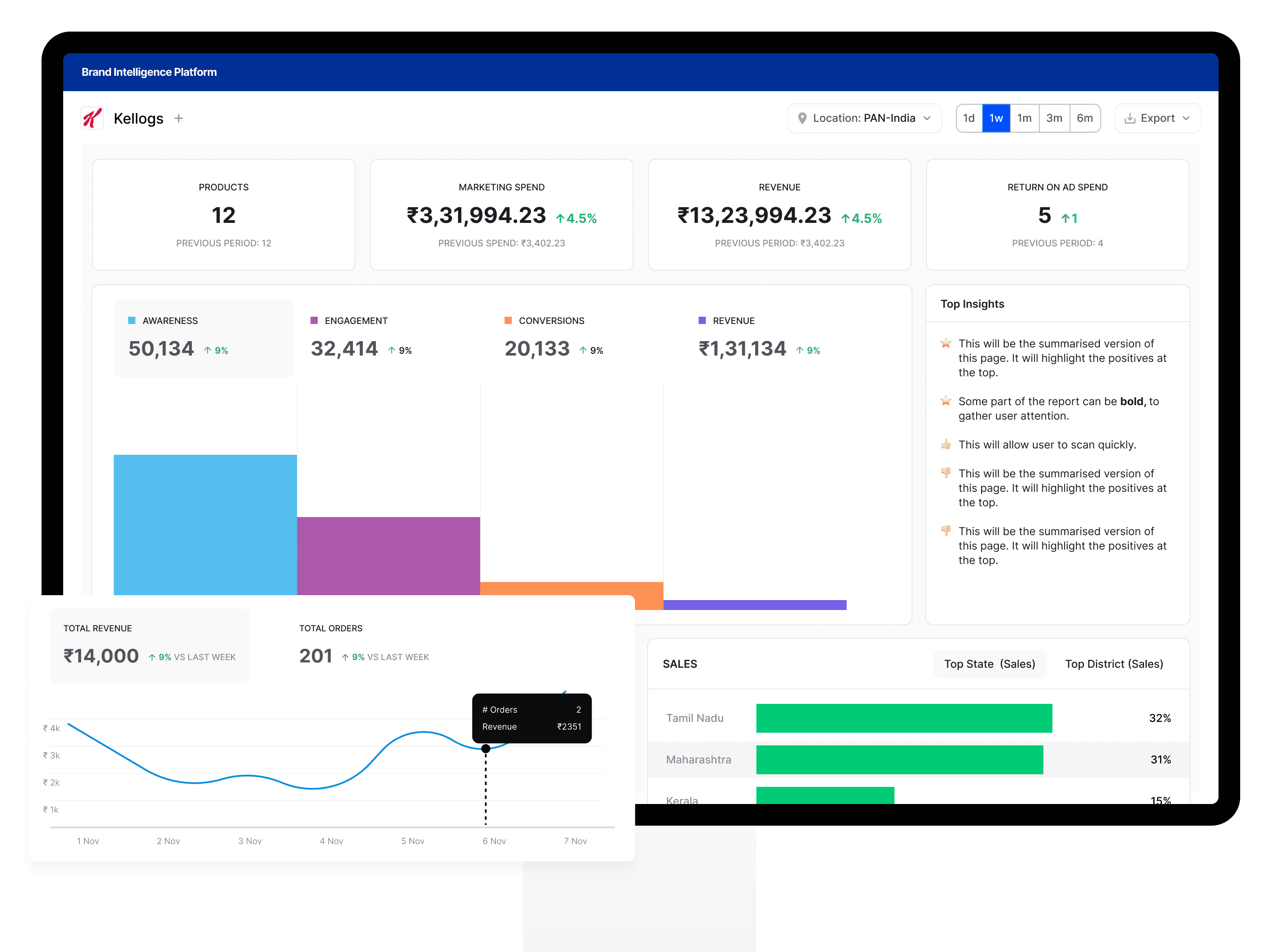
CHALLENGE
Our platform processed transactions.
Brands needed clarity, attribution, and control.
National brands were investing in banners, offline merchandising, and SKU promotions without knowing what truly drove sales.
Data was fragmented.
Attribution was unclear. Regional performance lacked visibility.
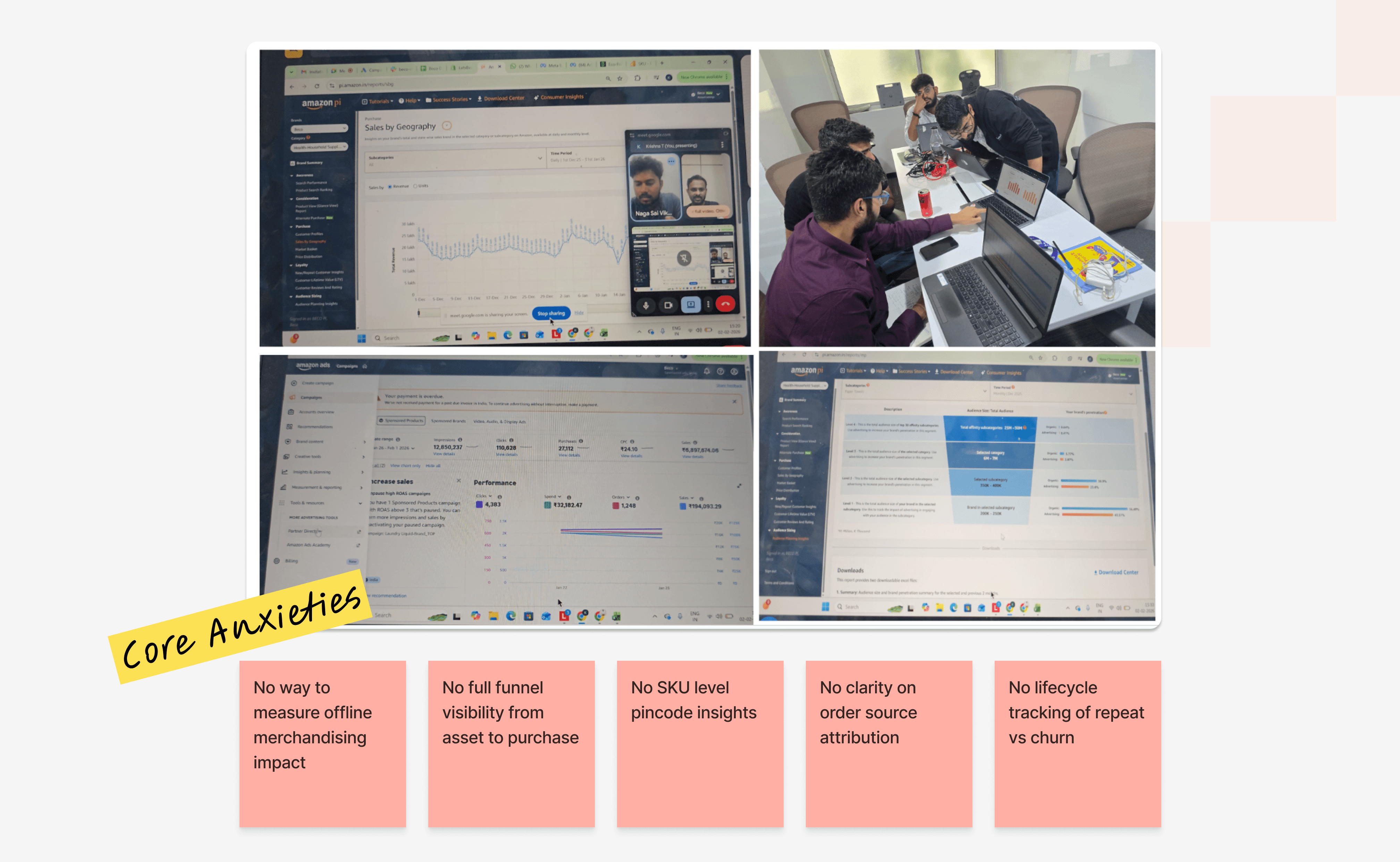
Decision-making relied on external platforms like Amazon PI.

RESEARCH
Through interviews with founders, brand managers, and category managers, one thing became clear: they do not want more reports, they want clarity. Their biggest need was a complete funnel view from asset to purchase. They wanted to know where orders were coming from, which SKU was growing in which state, and how repeat customers were behaving over time. The challenge was to design a system that combines online campaign data and offline merchandising performance into one simple view. We had only one month for a PoC, T+1 data lag, and no existing attribution framework. We had to define how performance would be measured before designing how it would be shown.
Introducing
Brand Intelligence Portal (BIP)
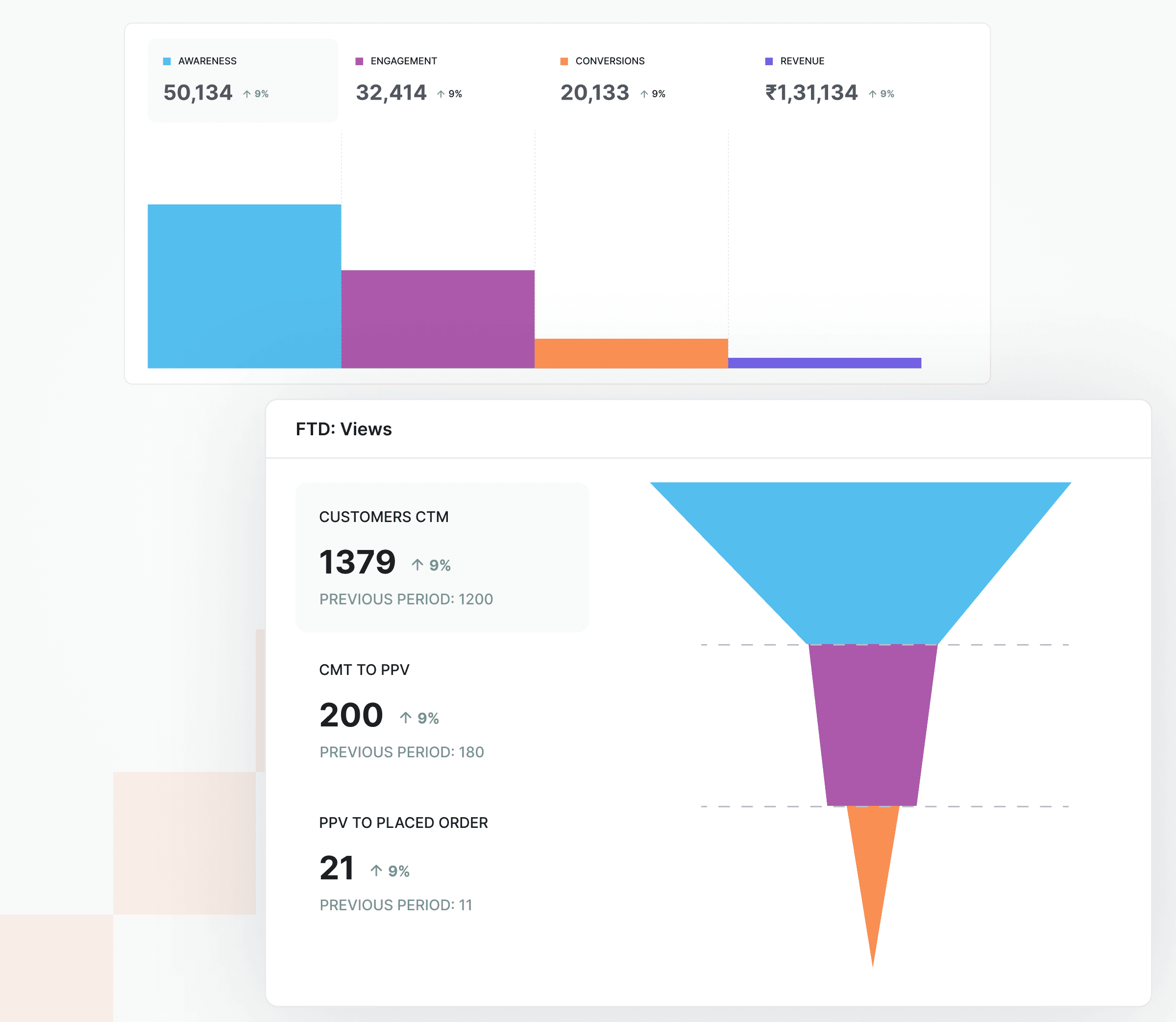
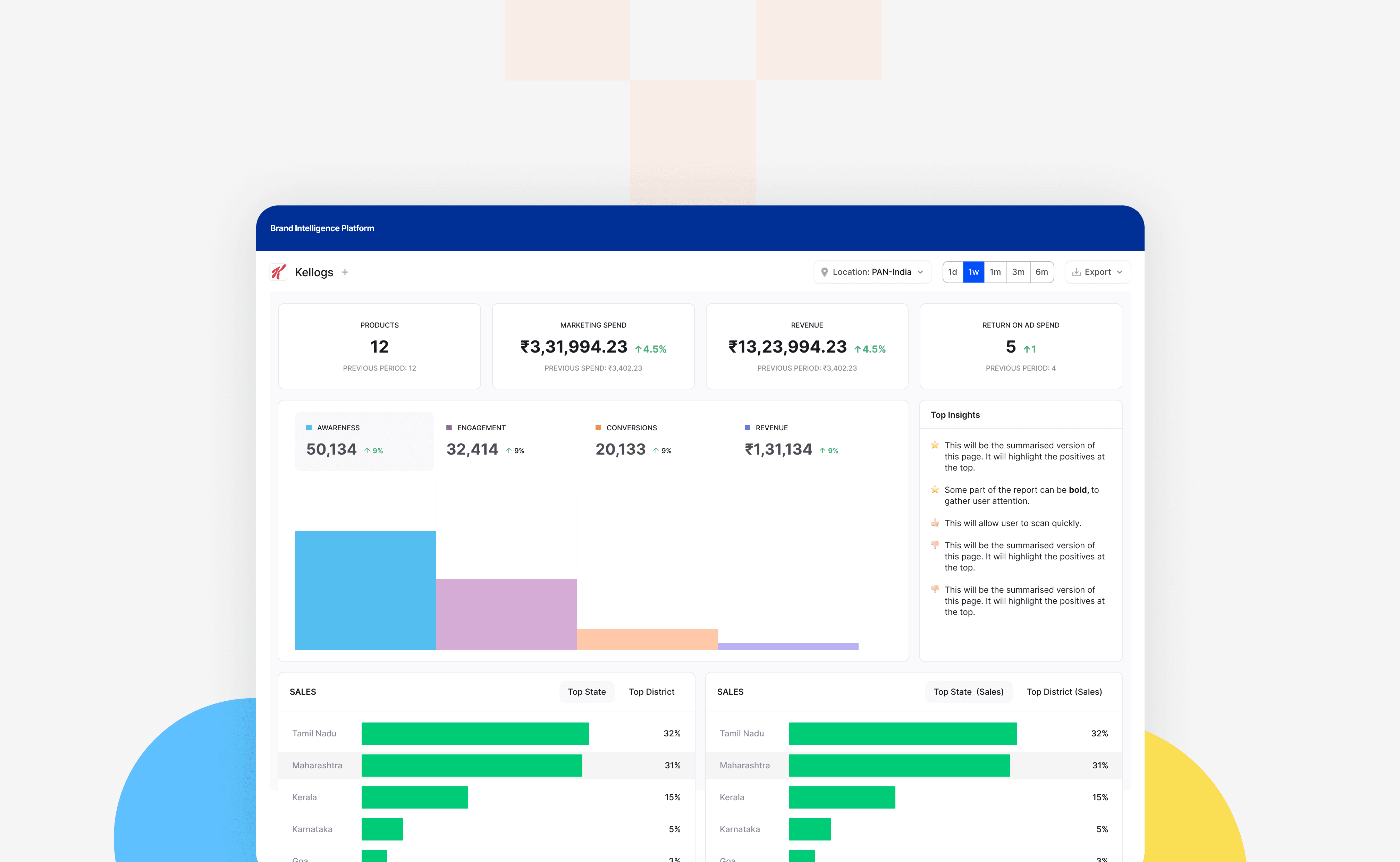
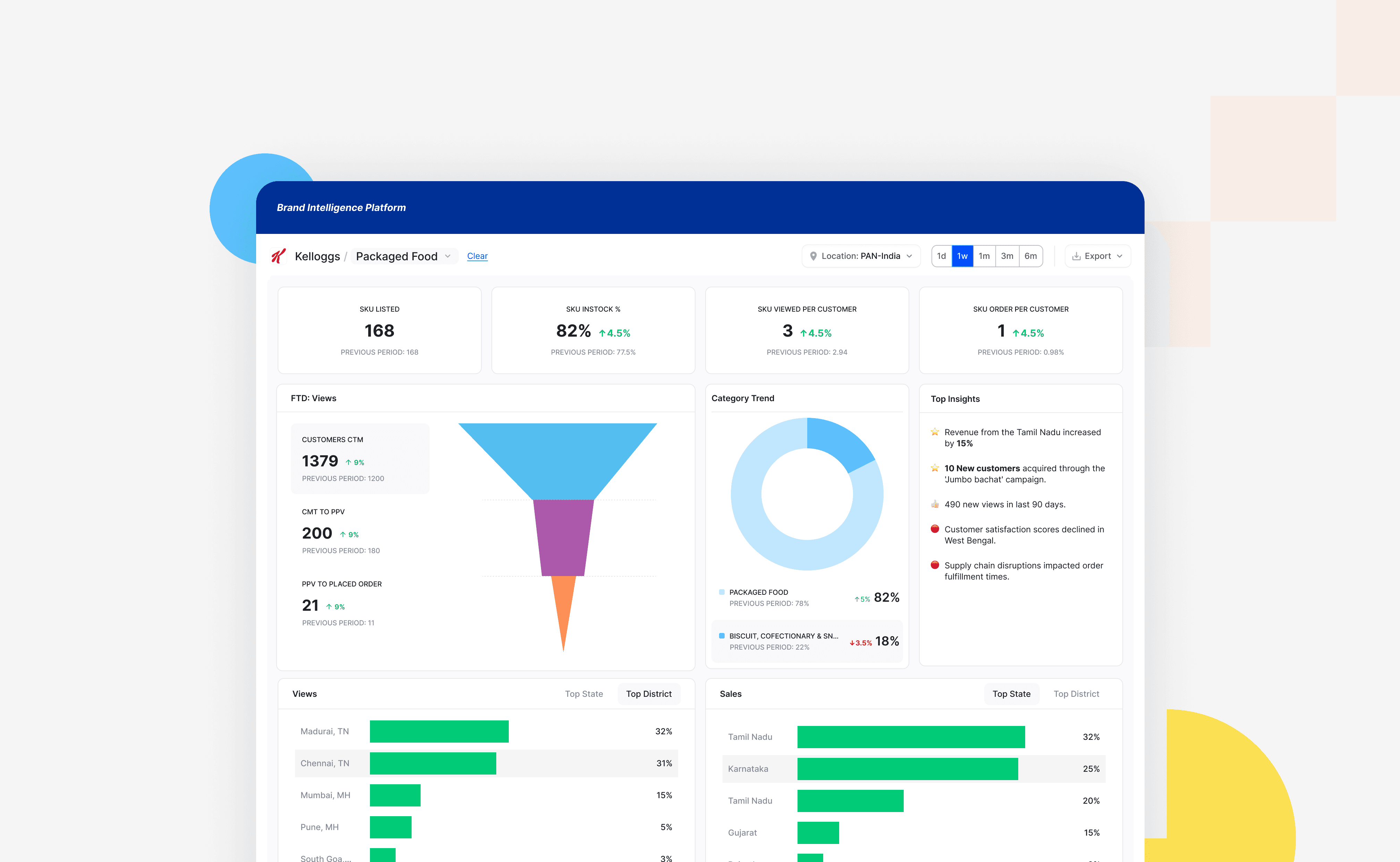
View → Click → Purchase funnel visibility
See how many people viewed a banner, how many clicked, and how many finally purchased. This gives brands a clear picture of where customers drop off and where performance is strong.
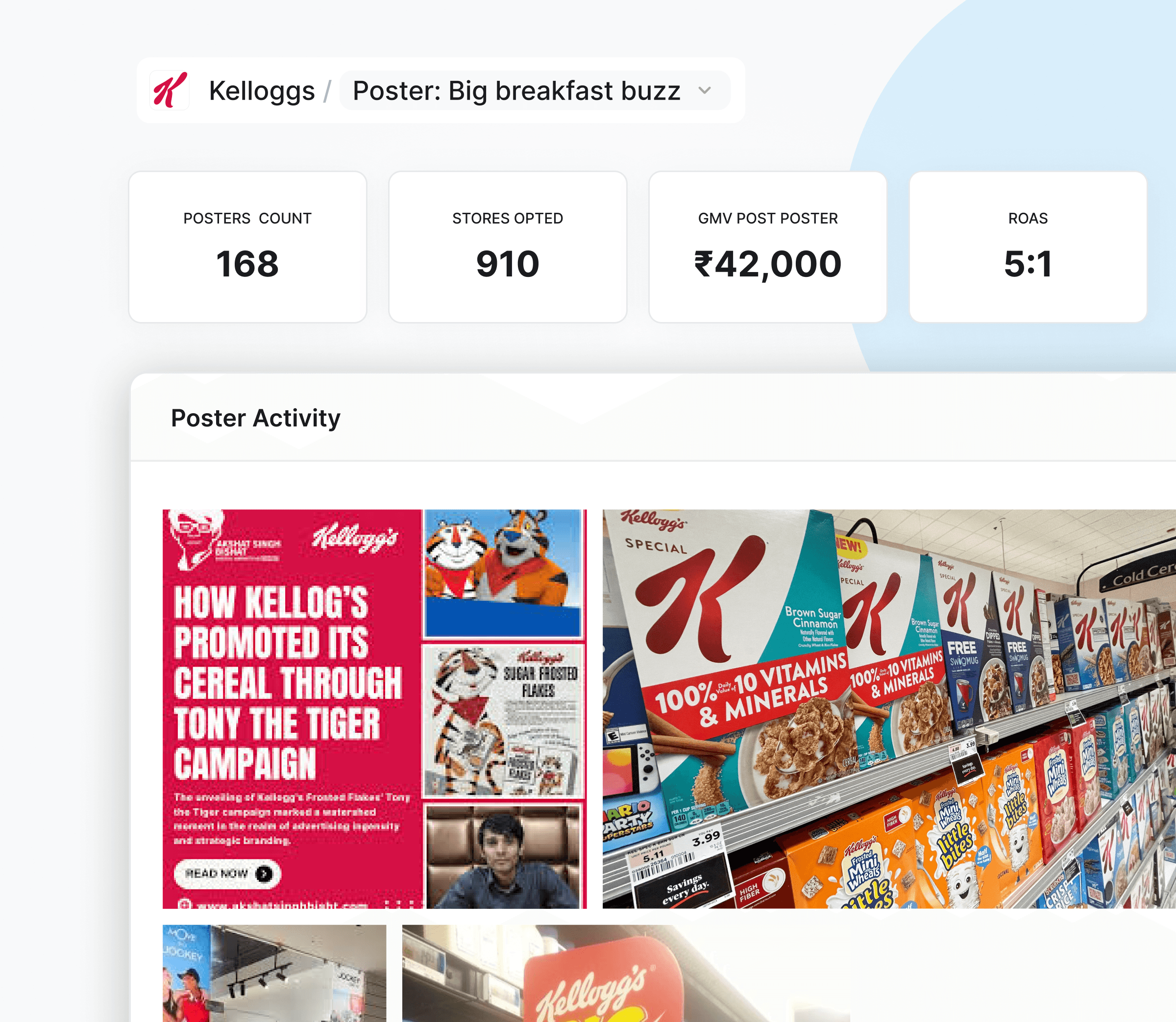
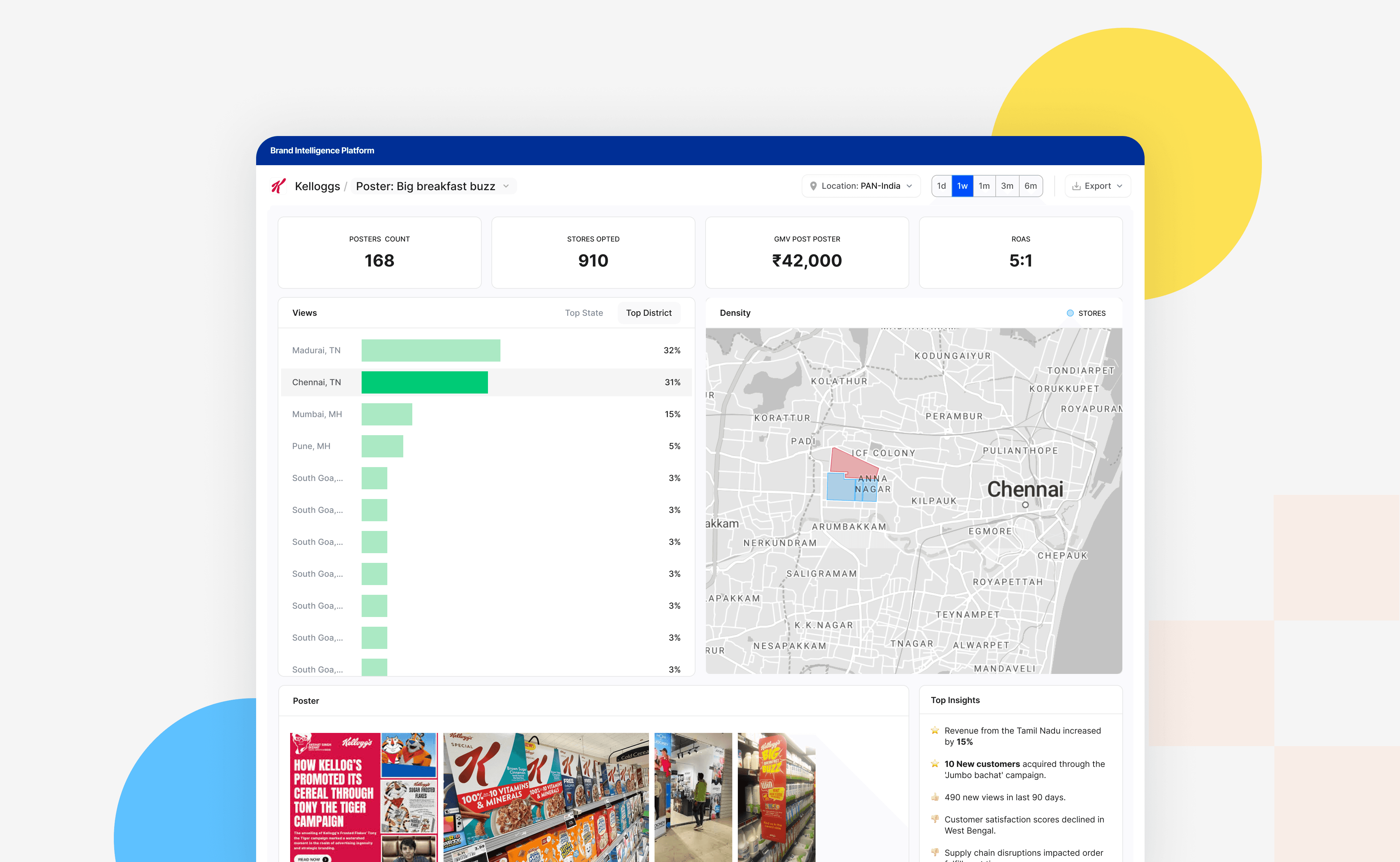
Banner-to-SKU attribution
Understand which specific product sales were influenced by a campaign or banner. Brands can clearly see which creative or placement actually drives revenue.
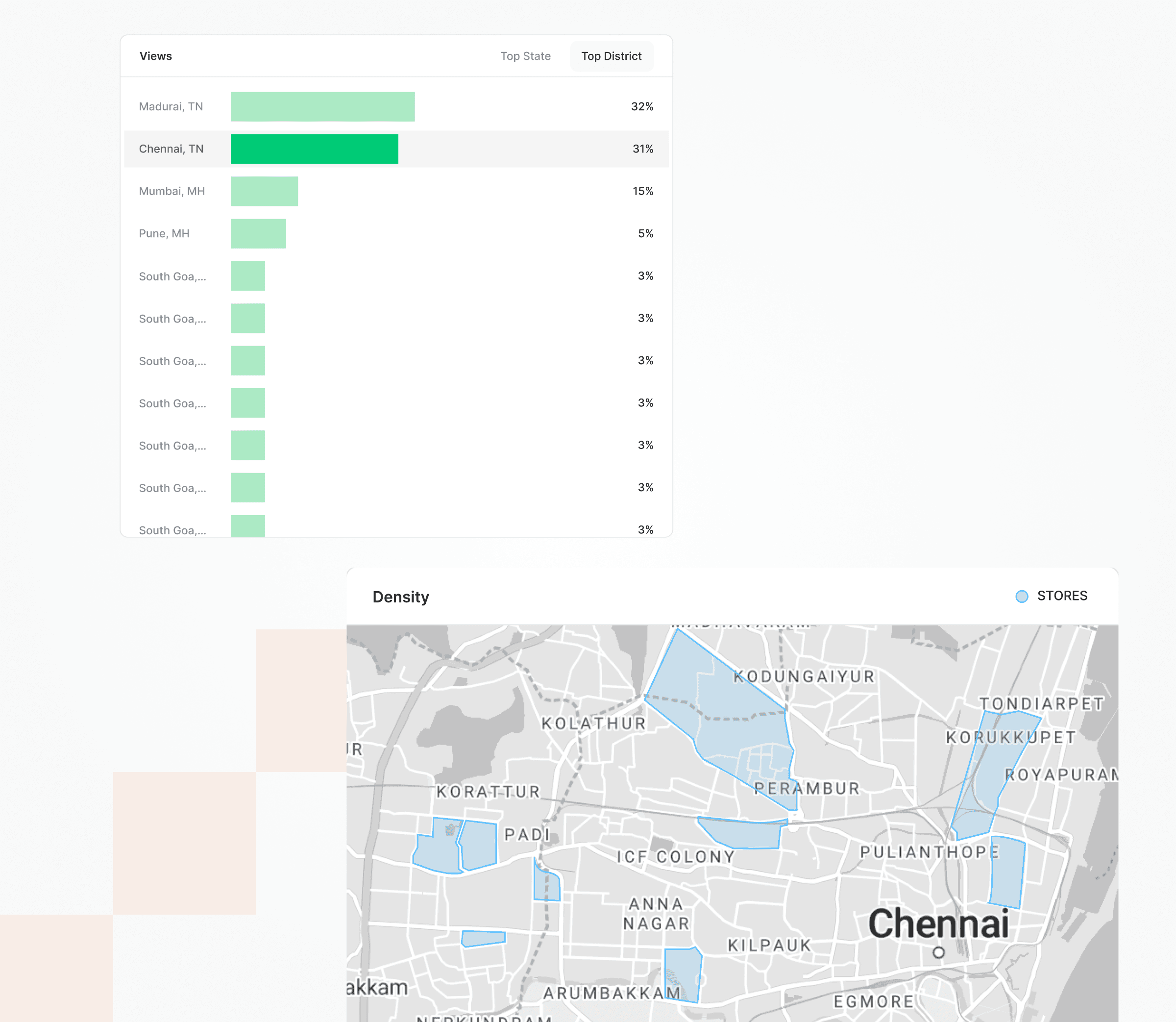
Pincode-level geographic performance
Track which SKU is selling in which region, down to postal code level. This helps brands decide where to push marketing, increase inventory, or focus new launches.
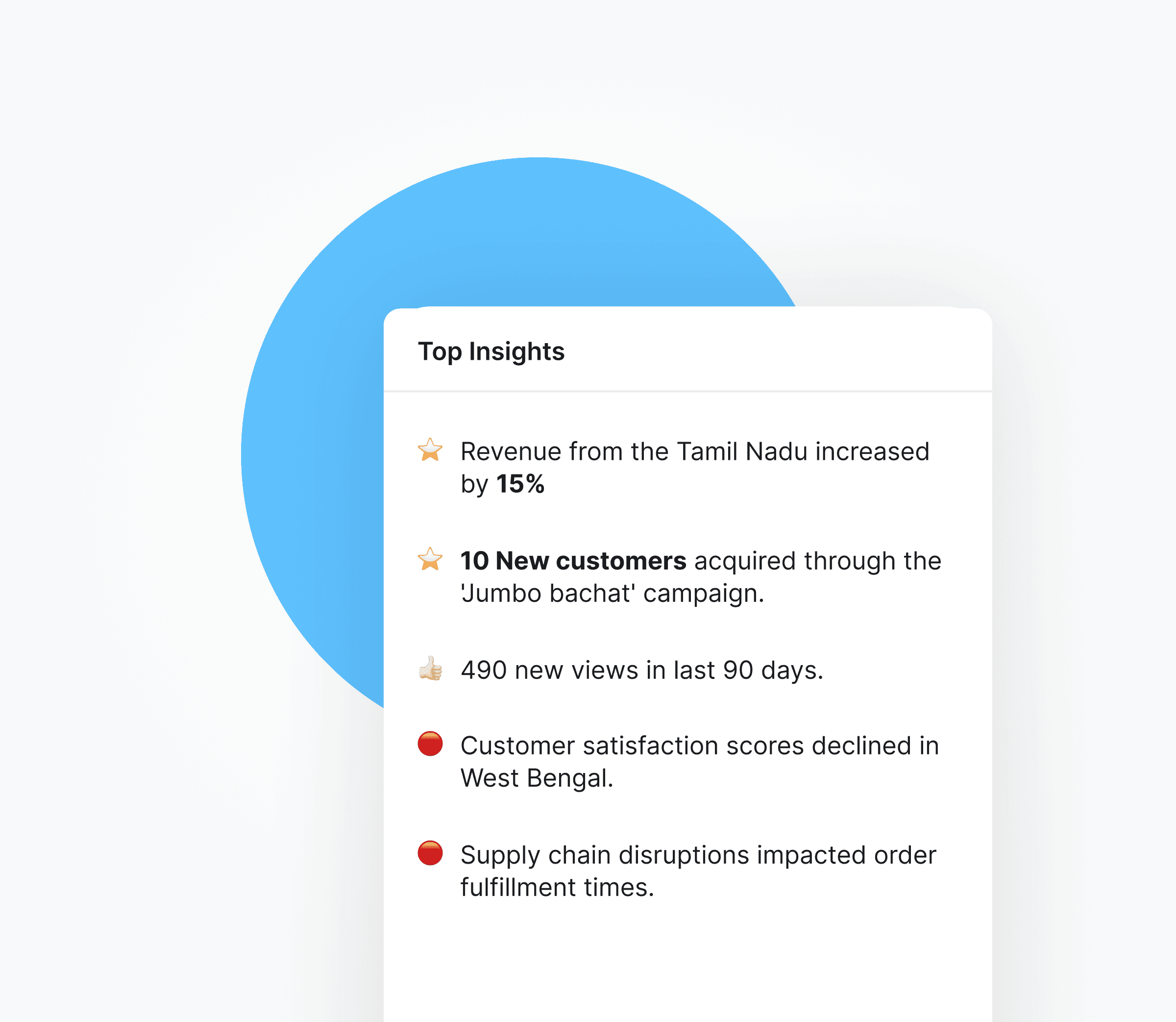
Prescriptive business insights
Instead of only showing numbers, AMP highlights key changes and suggests what action to take next. This reduces guesswork and speeds up decision making.
⭐
Reframed the problem from reporting to decision infrastructure.
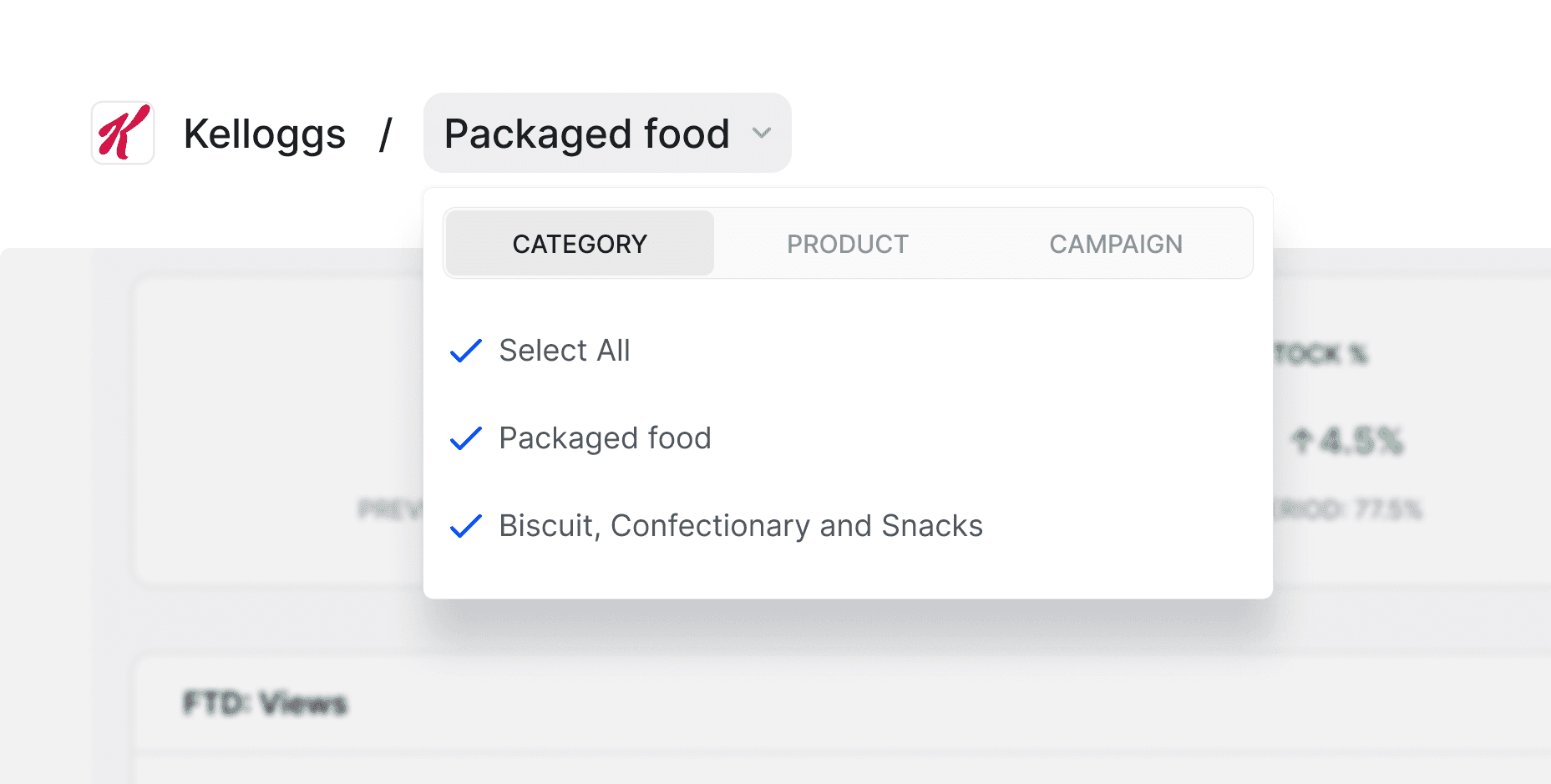
BIP mirrors how enterprise brand teams think:
Brand → Category → Product → Campaign, with actionable signals layered on top.
The result is a system that enables confident capital allocation, strengthens brand retention within our ecosystem, and positions the platform as a growth partner, not just a transaction layer.
IMPACT
PoC validated with leadership.
Defined attribution philosophy for platform.
Established offline merchandising measurement as competitive differentiator.
Created foundation for performance based monetization strategy.